





KINETIC SKUNK

GitLab delivery controlfor AWS and Azure platforms

Kinetic Skunk helps teams design, migrate, secure, and govern GitLab delivery paths for cloud platforms that need reliable releases, clear controls, and proof that change is managed properly.

GitLab logo

GitLab partner context for governed cloud delivery

GitLab partner badges give diligence context. The stronger proof is how the delivery model connects migrations, CI/CD, runners, security checks, and release evidence to managed AWS and Azure platforms.

GitLab Channel Partner badge

GitLab Channel Partner context

Channel partner context supports commercial and platform conversations when GitLab is part of a wider cloud operating model.

Procurement, platform, and delivery stakeholders can connect GitLab adoption to partner programme context.

GitLab Professional Services Partner badge

GitLab Professional Services Partner context

Professional Services Partner context supports implementation conversations around migrations, CI/CD design, runner strategy, and delivery governance.

Teams get GitLab delivery help tied to practical implementation work, not a generic tooling conversation.

GitLab delivery evidence

Existing insights cover DevSecOps foundations, pipeline streamlining, secure code practices, Jenkins migration, custom runners, and AI-assisted code quality governance.

Buyers can see the delivery themes before deciding where GitLab should govern cloud platform change.

How GitLab supports managed cloud delivery

GitLab is the delivery control layer when AWS and Azure platforms need change to stay reviewed, repeatable, and explainable.

Delivery foundation

Code, infrastructure, environments, and releases follow one governed path into managed platforms.

Built-in controls

Security checks, approvals, runner boundaries, and exception handling stay close to the merge request.

Operational evidence

Artifacts, deployments, approvals, and rollback signals remain visible for support and review.

Below is how each GitLab service lane strengthens that delivery path.

GitLab Services We Can Deliver

Expand each lane to see how GitLab delivery control supports managed AWS, Azure, and cloud platform operations.

Cloud delivery pipelinesCloud Platform Delivery Pipelines
AWS and Azure workloads are designed around repeatable build, scan, approval, deployment, and rollback paths.

GitLab CI/CD paths give cloud workloads a controlled route from source change to release.

We design the pipeline around environments, approvals, artifacts, deployment evidence, and rollback thinking before production pressure lands.

Plan cloud delivery pipelines

Part of the AWS Managed Platform

This is the delivery foundation for managed platforms where releases need to be predictable and explainable.

  • Pipeline templates for application, infrastructure, and release stages
  • Environment promotion with approvals and artifacts visible
  • Rollback and deployment evidence tied to the change record
Toolchain consolidationGitLab Migration and Toolchain Consolidation
Fragmented delivery moves toward one workflow without losing the controls teams rely on.

Jenkins, scripts, and disconnected delivery tools often hide ownership and release evidence.

We map projects, groups, secrets, runners, pipeline parity, and staged cutover so migration decisions stay controlled.

Plan GitLab migration

Part of the AWS Managed Platform

This is the migration path for teams that need fewer delivery tools and clearer operational ownership.

  • Project and group inventory before cutover
  • Pipeline parity and secrets planning
  • Staged migration with ownership visible
DevSecOps controlsDevSecOps Controls for Managed Platforms
Security and quality checks become part of release control, not a separate late-stage review.

Managed platforms need release paths that show what was scanned, approved, excepted, and deployed.

We embed SAST, dependency scanning, container scanning, secret detection, approvals, and exception handling into the delivery workflow.

Plan DevSecOps controls

Part of the AWS Managed Platform

This is the control path for teams that need security evidence to stay connected to release work.

  • Security scans close to the merge request
  • Approval and exception handling before release
  • Evidence that supports customer and risk review
Runner platformRunner and Build Platform Engineering
Build capacity, isolation, and queue behaviour match the workloads the platform needs to release.

GitLab runners become platform infrastructure when they build, scan, package, and deploy production workloads.

We shape runner fleets around workload needs, security boundaries, queue expectations, cost control, and isolation.

Plan runner engineering

Part of the AWS Managed Platform

This is the build-platform path for teams whose delivery reliability depends on runner architecture.

  • Runner tags, pools, and isolation aligned to workload risk
  • Queue and build behaviour made visible
  • Cost and access boundaries designed into the build layer
AI delivery governanceAI-Assisted Delivery Governance
AI-assisted development supports delivery without weakening review, test, or security expectations.

AI-assisted development only helps when teams can still explain quality, security, and review decisions.

We connect AI-assisted code quality patterns to review, testing, approval, and governance routines that keep humans accountable.

Plan AI delivery governance

Part of the AWS Managed Platform

This is the governance path for teams adopting AI assistance inside delivery workflows.

  • AI assistance bounded by review and test expectations
  • Quality and security signals kept visible
  • Governance that supports adoption without overclaiming autonomy

How we make GitLab useful for cloud delivery

GitLab delivery work starts with the current estate, then moves toward a governed operating model that can support AWS, Azure, and managed hosting platforms.

Existing GitLab estate

Already on GitLab? Tighten the delivery controls.

We review groups, projects, runners, variables, pipelines, approvals, scanners, and environment promotion before changing what teams already rely on.

Review your GitLab estate
  1. 1

    Delivery estate assessment

    Map repositories, groups, permissions, runners, secrets, CI templates, deployment targets, and current release evidence.

    Known delivery surface

  2. 2

    Control and fit review

    Separate what should stay, what should be standardised, and what needs stronger security or release governance.

    Prioritised control plan

  3. 3

    Pipeline and runner alignment

    Align templates, runner tags, environments, artifacts, approvals, and rollback routines to managed cloud platform needs.

    Repeatable delivery paths

  4. 4

    Security and evidence hardening

    Wire scanning, exception handling, approval policy, and deployment evidence into the normal merge and release flow.

    Reviewable controls

  5. 5

    Managed platform handover

    Document operating routines so GitLab delivery supports AWS, Azure, and managed hosting operations after implementation.

    Operable delivery model

New managed cloud platform

Starting fresh? Build GitLab into the operating model.

We design GitLab delivery alongside the cloud platform so applications, infrastructure, scans, approvals, and release evidence are planned from day one.

Plan GitLab delivery
  1. 1

    Operating model design

    Define group structure, project templates, branch strategy, runner model, environment promotion, and cloud deployment targets.

    Clear delivery design

  2. 2

    Pipeline foundation

    Create repeatable CI/CD templates for application, infrastructure, security, and release stages across AWS and Azure workloads.

    Ready delivery foundation

  3. 3

    Cloud deployment wiring

    Connect build, scan, package, deploy, and rollback routines to the managed AWS or Azure platform path.

    Controlled promotion

  4. 4

    Governance and training

    Set approval rules, exception handling, ownership, and practical team guidance so controls are usable.

    Sustainable adoption

  5. 5

    Managed operations handover

    Hand over release evidence, runner ownership, security checks, and support routines into the platform operating model.

    Managed cloud delivery

GitLab delivery proof

These insights connect GitLab partner work to migration, CI/CD control, DevSecOps, custom runners, and AI-assisted delivery governance.

Editorial hero for GitLab pipelines, flow, and runner operations

Advantages of Gitlab with Custom Runners

Executive Summary This Case Study explores Advantages of Gitlab with Custom Runners and how KineticSkunk rebuilt its CI/CD systems by using a bespoke fleet of custom GitLab Runners. The result? More than 70% faster validation, real time feedback, extra security, and a self-healing build pipeli…

Editorial hero for DevSecOps foundations with GitLab, planning and toolchain

Part 1: Laying the Foundation for DevSecOps with GitLab

Discover how GitLab is revolutionizing software development with its DevSecOps approach, streamlining efficiency and enhancing security in one seamless platform. Learn how integrating development, security, and operations can not only accelerate project timelines but also fortify your code agains…

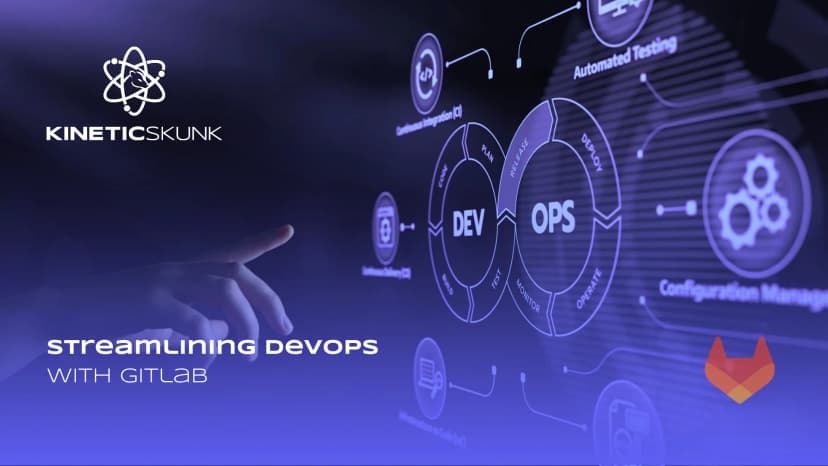
Editorial hero for streamlined DevOps with GitLab, pipelines and flow

Part 2: Effortlessly Streamline DevOps with GitLab

Fortifying Your Code: Building Secure Pipelines with GitLab" dives deep into the crucial role of security within the software development lifecycle. Highlighting GitLab's comprehensive suite of security tools, this article showcases how automated security scanning and compliance as code can seaml…

Part 3: Building secure code with GitLab, pipeline security and compliance

Part 3: Building Secure Code with GitLab

Fortifying Your Code: Building Secure Pipelines with GitLab" dives deep into the crucial role of security within the software development lifecycle. Highlighting GitLab's comprehensive suite of security tools, this article showcases how automated security scanning and compliance as code can seaml…

Make cloud change easier to trust.

If AWS and Azure are becoming more important to your business, your delivery system needs to show how change is reviewed, tested, secured, approved, and released.