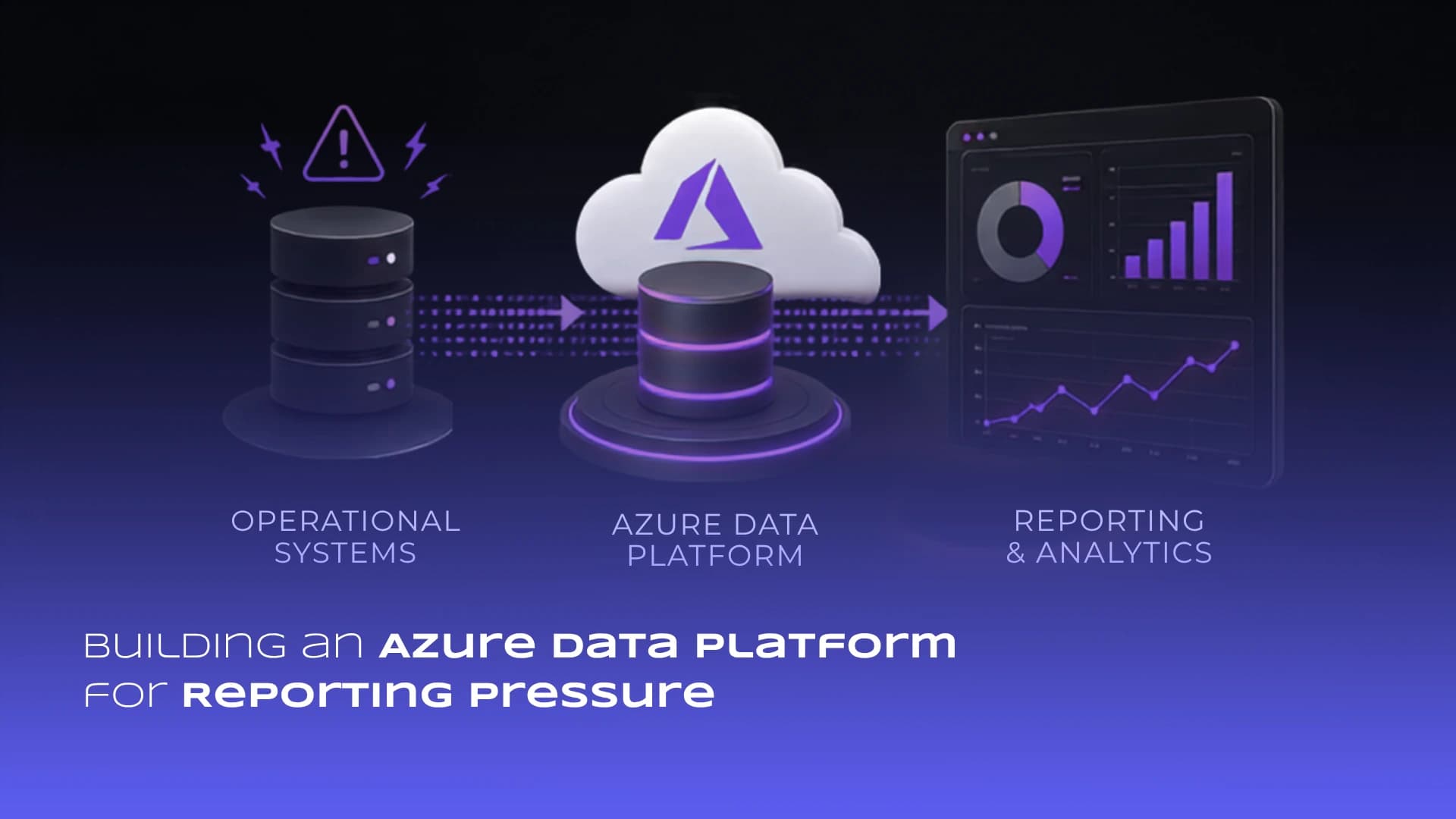
Situation at a glance
- Industry: workspace, hospitality, and venue technology.
- Problem: reporting queries strained operational databases and limited reporting scale.
- Platform decision: create a dedicated reporting foundation backed by Azure data patterns.
Context and reporting pressure
Core points
- Reports and dashboards were pulling directly from operational databases.
- Heavy reporting demand created performance pressure and limited the ability to scale reporting needs.
- Leadership needed better access to sales, event, and financial metrics without destabilising core systems.
Azure data platform choices
Core points
- Operational data was extracted into a dedicated reporting platform so analytical queries no longer competed with core application workloads.
- Financial sales and event metrics were aggregated by source and status to support clearer reporting paths.
- Azure storage and data processing patterns gave the proof of concept a scalable foundation connected to Azure partner services.
Delivery milestones and operating controls
Core points
- The proof of concept established the shape of a dedicated reporting platform before a wider rollout.
- Data movement, reporting grain, and source categories became explicit instead of hidden inside dashboard queries.
- The platform separated operational performance from reporting growth.
Skunk tip
- Define reporting grain and data ownership before optimising dashboards, otherwise every report becomes a platform exception.
Measured outcomes and lessons
Core points
- Operational databases were protected from heavy reporting pressure.
- The platform created a clearer basis for complex and frequent reporting.
- The main lesson is that data platforms should reduce operating risk while improving decision quality.
A dashboard is not a data platform. If every report hits production tables, reporting is part of the incident surface.