Situation at a glance
- Client context: a SaaS provider with reporting and dashboards running against operational databases.
- Constraint: growing analytics demand was increasing load on production systems and limiting independent reporting scale.
- Success definition: reliable business insight without compromising application performance or system stability.
Client context and reporting pressure
Core points
- The SaaS provider relied on its operational database for reporting and dashboard workloads.
- As reporting demands increased, the platform had to support both transactional workloads and analytics queries.
- Kinetic Skunk partnered with the client to separate reporting workloads from the production environment.
Production database risk and performance bottlenecks
Core points
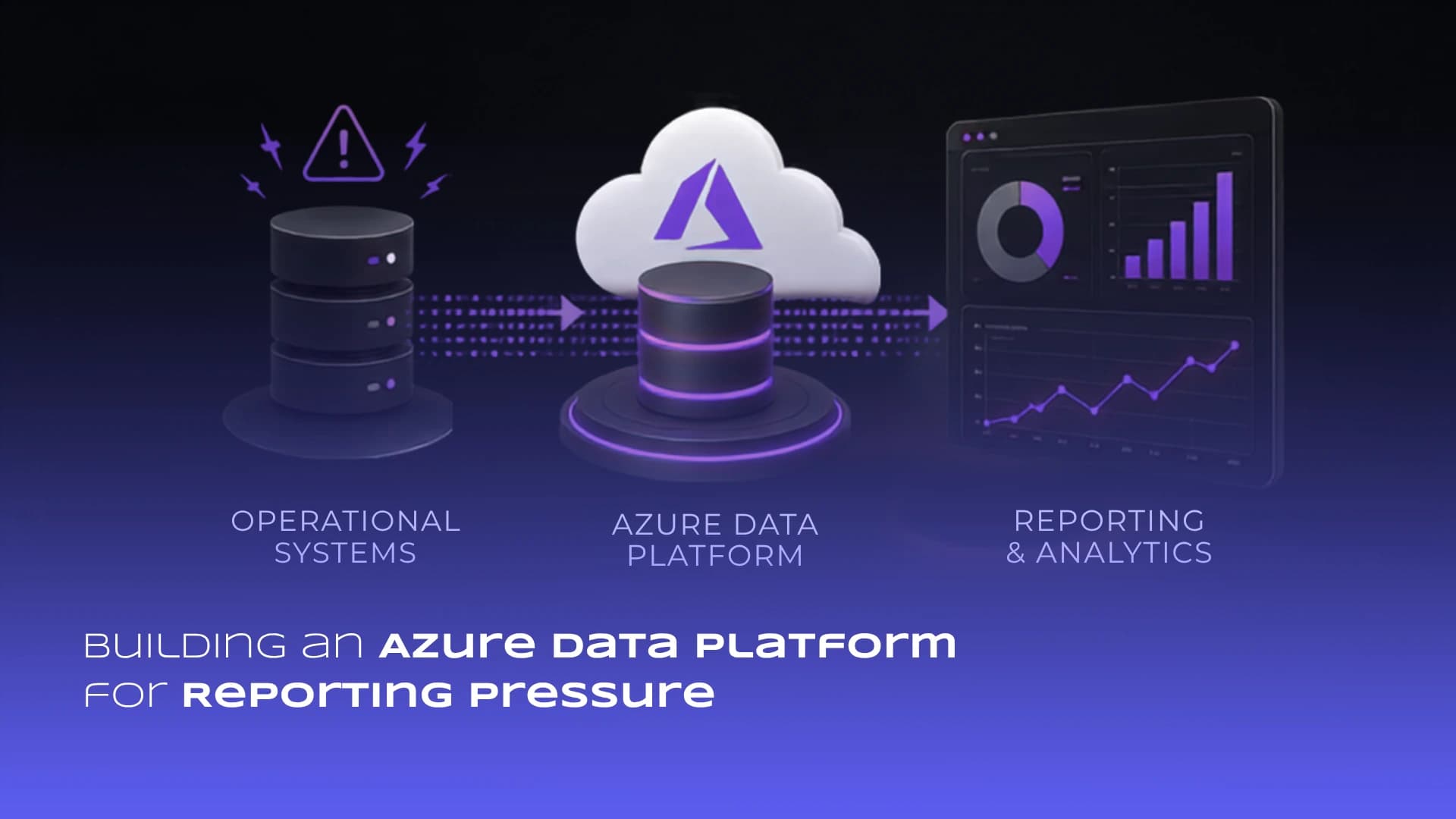
- Reporting queries ran directly against production databases, increasing load on systems that served the core application.
- The architecture limited the client's ability to scale reporting independently of transactional systems.
- Growing demand for business insights created a stability risk during peak usage periods.
If every dashboard query hits production, reporting becomes part of the application performance risk.
Dedicated Azure data platform design
Core points
- Kinetic Skunk designed a modern data platform to decouple reporting from transactional systems.
- Azure SQL Database introduced a dedicated reporting data store for analytics and dashboard workloads.
- Azure Storage and staging patterns provided a foundation for future enhancements such as data lakes, governance, and advanced analytics.
Skunk tip
- Separate production protection from reporting convenience first, then optimise dashboard experience on top of a safer data flow.
Data Factory, ETL, and reporting data model delivery
Core points
- Azure Data Factory orchestrated batch data extraction and transformation processes.
- Structured ETL pipelines moved data from source systems into a dedicated reporting layer.
- Raw operational data was transformed into query-ready datasets aligned to business metrics.
Outcomes, scalability, and future analytics foundation
Core points
- Production databases carried less reporting load, reducing the risk of performance degradation during peak usage.
- Reporting became faster, more reliable, and easier to scale independently of the core system.
- The Azure partner services work created a stronger foundation for data consistency, business insight, and future analytics expansion.